
Advocate BK Singh is a Property Lawyer for Supreme Court, dealing with builder-buyer disputes, partition matters, and restraint orders.
Property cases that go to the Supreme Court usually have big legal issues that come up because of final decisions that affect ownership, possession, redevelopment rights, land acquisition compensation, partition entitlements, specific performance enforcement, and document validity. The quality of the legal issues at stake, the clarity of the record, and the ability to show a serious miscarriage of justice that calls for the Supreme Court's involvement under its appellate and extraordinary jurisdiction all play a role in Supreme Court property litigation.
Advocate BK Singh helps clients with Supreme Court property cases by focusing on the Supreme Court. This includes framing issues around binding legal principles, carefully curating records, writing precise Special Leave Petitions and civil appeals, and creating a structured interim protection strategy to stop harm that can't be undone. The goal is to get urgent Supreme Court orders when needed (stay, restraint on alienation, preservation of possession, or protective orders) and to present a well-organized case theory that meets the Supreme Court's strict standards for admission and final hearing.
In Supreme Court property matters, maintainability, limitation, and question-of-law framing determine whether the case survives admission.
The first legal step is not 'argue harder' it is identifying the correct Supreme Court route and shaping the matter around legally reviewable issues. Advocate BK Singh evaluates whether the matter warrants Special Leave, a civil appeal pathway where applicable, or other permissible Supreme Court proceedings, and then refines the challenge into crisp grounds that highlight jurisdictional error, legal inconsistency, or a demonstrable failure of justice.
Supreme Court interim directions are secured when urgency is real, harm is irreversible, and the record supports immediate protection.
Interim relief in the Supreme Court is not granted on narration alone; it requires a calibrated presentation of risk and a clean documentary foundation. A persuasive interim request is built through a precise chronology, properly arranged annexures, and focused articulation of immediate prejudice such as dispossession, coercive execution impact, or irreversible third-party creation. This strengthens applications for stay, protective restraint, and preservation orders tailored to Supreme Court practice.
Resolution is valuable only when Supreme Court-level drafting closes ambiguity and prevents future contest.
Where settlement is workable, documentation must be unambiguous and enforceable. Advocate BK Singh structures settlement terms with clearly defined performance steps, timelines, undertakings, default triggers, and documentary deliverables so that closure is clean, verifiable, and resistant to future dispute over interpretation.
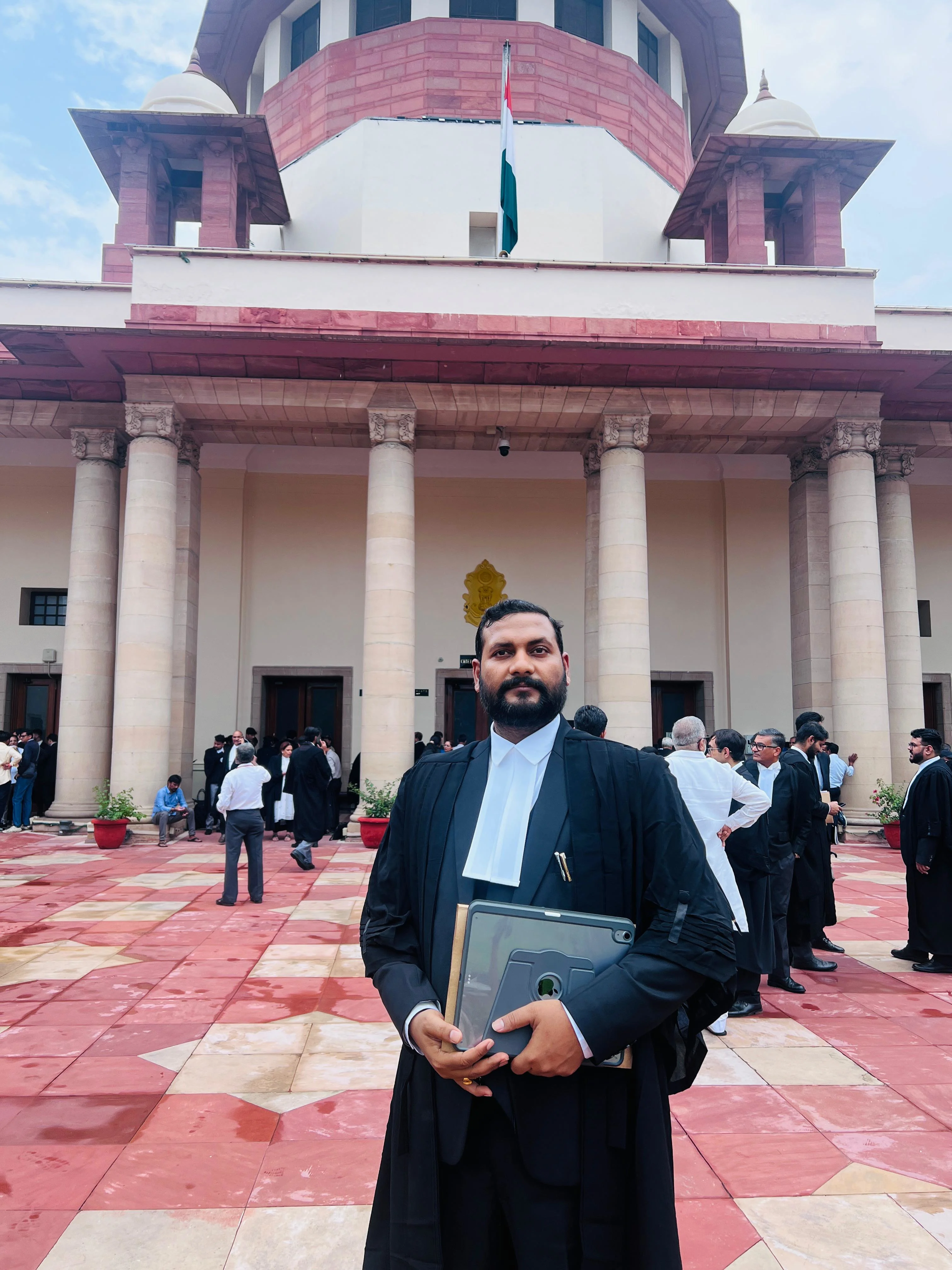
Supreme Court property cases require sharp legal questions, clean paperbooks, and disciplined drafting that matches the Court's admission and final hearing standards. Advocate BK Singh assists clients before the Supreme Court with petition/appeal drafting, record organization, interim stay strategy, focused written submissions, and settlement documentation designed to remain precise, lawful, and enforceable.
In Supreme Court property litigation, persuasive advocacy begins with a clean record and a sharply defined legal issue. Advocate BK Singh reviews drafts to ensure the case remains precise, annexures are reliable, and the relief sought is framed in language that the Supreme Court can evaluate without ambiguity.
Unit for Record Coherence and Property Rights Verification
A consolidated master file is curated so that every factual assertion is traceable to a document and every prayer is supported by a legally relevant annexure. Advocate BK Singh aligns dates, references, and supporting materials to prevent internal inconsistencies that weaken Supreme Court admission and interim consideration.
Hearing Notes and Post-Order Action Unit for Supreme Court property matters
Every Supreme Court listing must be treated as a targeted procedural milestone: completion of filings, curing defects, service proof, interim briefing, compliance reporting, or final argument readiness. Advocate BK Singh ensures courtroom submissions remain consistent with the record and that follow-up actions are completed with documentary proof.
Supreme Court property proceedings become manageable when you follow a structured plan: correct Supreme Court entry strategy, record discipline, credible interim protection package, and settlement readiness where resolution is practical. This roadmap is designed to help clients move forward with clarity and legal control in Supreme Court practice.
Readiness steps before the first effective Supreme Court listing
Supreme Court-stage execution to obtain enforceable relief
This roadmap supports Supreme Court clients by ensuring filings are clean, interim protection is urgency-backed, and settlement positions are documented with enforceable clarity.
Practical outcomes of this structured method include
Property disputes at the Supreme Court level can affect wealth, housing security, and long-term family stability. Advocate BK Singh provides structured Supreme Court representation with record discipline, precise legal drafting, and steady courtroom handling focused on lawful, enforceable outcomes.
Your matter is assessed for Supreme Court viability, limitation sensitivity, and legal issue strength so that filing is strategic, not reactive.
Your petitions, annexures, chronology, and relief drafts are organized into a single master bundle so the narrative remains stable at every stage.
Each listing is approached with a specific goal defect curing, service proof, interim briefing, compliance filing, or final readiness so the matter moves forward.
Whether the need is urgent protection or final directions, prayers are drafted with clarity and record support so they remain executable.
The record remains consistent with disciplined dates, accurate references, and no avoidable contradictions that weaken credibility.
After every development, you receive structured guidance on filings, compliance proof, safe documentation, and time-sensitive actions.