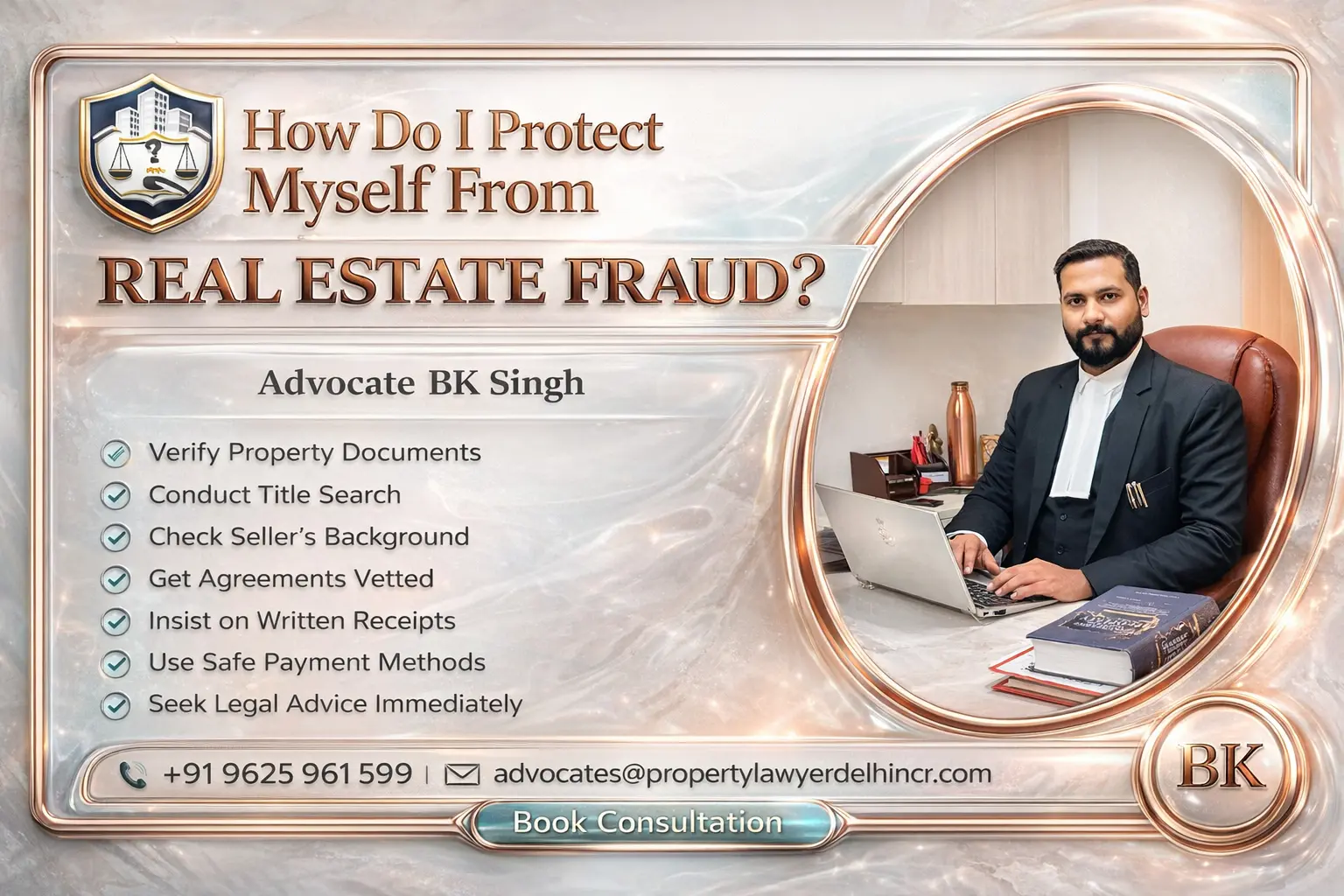
How Do I Protect Myself from real estate fraud?
People in India often get cheated on real estate deals when they believe what they hear, don't check the paperwork, or pay too quickly because they think the deal is urgent. Middle-class families often put their life savings into investments, and small businesses often keep their working capital in a store, office, or warehouse. One wrong move can cause years of stress. Property Lawyer Delhi helps buyers and sellers with checks that stop fake ownership claims, double sales, forged papers, and hidden loans on property. Advocate BK Singh makes sure the process is clear and useful.
When you treat every property deal like a paper trail case instead of a handshake deal, you can protect yourself. You need written proof of your title, identity, approvals, and payments. Before you sign, you should check that all of your documents match official records. When you hire Property Lawyer Delhi, Advocate BK Singh helps you spot problems early, write safer clauses, and hold off on payments until the paperwork backs up the story.
1. Learn about the most common types of real estate fraud in India.
Fraudsters often use the same tricks in different cities, such as selling property without a clear title, showing fake GPA-based ownership, hiding family fights, and making duplicate agreements with more than one buyer. A lot of people also have to deal with builder fraud, where possession dates keep changing, areas change without permission, and promised approvals never happen. This makes it harder to get bank loans and lowers the resale value.
Another common trick is to use fake registry papers, fake stamp duty papers, or altered property tax records to make a property look clean. Some buyers also fall into token amount traps, where the seller takes the money, delays the paperwork, and then says the deal fell through. Property Lawyer Delhi can help you spot these patterns early on, and Advocate BK Singh can tell you what to do next to keep your money safe.
2. Check the chain of documents and the title ownership.
When you verify the title, you check to see who owns the property now and how they got it. You also check to see if the history of ownership looks legal and continuous. You should ask for the sale deed, any previous sale deeds, a partition deed if there is one, inheritance papers if there are any, and mutation and tax records. Then, you should compare the names, addresses, and property descriptions in each document.
You should also find out if the seller really owns the property or just has a risky document like an unregistered agreement or a limited power of attorney. If the chain has gaps, overwriting, or sudden changes, you should stop and check official records. Advocate BK Singh at Property Lawyer Delhi can do a proper title search for you so you don't end up in court later.
3. Check the status of the encumbrance loan and any lawsuits.
Even if a property looks perfect, it could still have a loan, a court stay, or an attachment that makes it impossible for you to own or sell it. You should check the status of any liens, ask for proof of loan closure if a bank financed it earlier, and make sure that no recovery case or SARFAESI action affects the property, especially in distress sales.
You should also look for pending lawsuits, family fights, or injunction orders. Even a small case can stop construction or a transfer. You could spend years fighting to get what you paid for if you buy without checking. Property Lawyer Delhi and Advocate BK Singh can help you check these risks and set up the deal so that the seller has to fix any problems before you pay them.
4. Check that the builder has the right approvals and that the project is following the rules.
You should check things like the approved plan, the project's completion status, its readiness for occupancy, and whether it follows the rules set by the local development authority when working on a builder project. When a builder sells units while approvals are still pending, or when the builder changes the layout and increases the density, buyers often get stuck. This can later affect safety, parking, and resale.
You should also check to see if the project meets RERA standards when they apply, and if the builder has properly disclosed the timelines, carpet area, and major permissions. If the builder is hesitant to share papers, see it as a warning, not a delay. Before you sign, Property Lawyer Delhi's Advocate BK Singh can look over the builder's paperwork and ask for the right disclosures.
5. Make safe payments and keep a record of them.
When people pay in cash, when receipts aren't formal, or when they pay a lot of money before signing a detailed agreement, fraud goes up. You should pay through banks, make sure you get the right receipts, and connect each payment to a milestone like signing, verifying documents, or registering.
You should also stay away from pressure tactics like "pay today or lose the deal," because real sellers will give you enough time to verify your information. If you have to pay in tokens, make sure the amount is small and that the terms for getting your money back are clear. Property Lawyer Delhi and Advocate BK Singh can write payment clauses that keep you safe if the seller backs out or if the documents don't work.
6. Use a strong sales agreement with clauses that protect you.
A good sales agreement does more than just talk about the price. It also spells out who is responsible for what, when things should happen, and what will happen if any information turns out to be false. It should include clear information about the property, title assurance, possession terms, pending dues, society dues, and tax liabilities. It should also say what happens if approvals fail or if a lawsuit comes up.
You should include clauses that let you cancel and get your money back if the seller hides information, delays registration, or won't give you the documents you need. A lot of arguments happen because people use template drafts that don't fit the situation. Property Lawyer Delhi's Advocate BK Singh writes contracts that are right for your case and help avoid future problems.
7. Check the ground and confirm the person's identity
Document checks are important, but on-the-ground checks often show the real story, like a property that is occupied, a boundary that doesn't match, or a fight with neighbors. Because scammers often show a different flat or plot, you should go at different times, talk to the people who live there, check the entry gate, and compare the site to the map and property description.
You should also carefully check the seller's identity by making sure that the Aadhaar or PAN information matches the documents and that the representative has the right to sign. If you deal with property that you inherited, you need to make sure that the heirs are legal and that they agree or have the right to do so. Property Lawyer Delhi helps you do both site checks and legal checks so you don't have to trust what you see.
8. What to do if you think fraud is going on and how a lawyer can help
If you think someone is trying to scam you, stop all payments right away, gather all of your messages and receipts, and don't sign any new documents under pressure. If you think someone is forging, cheating, or breaking the law, you should send a formal legal notice, ask to see the documents, and think about taking protective steps like filing a complaint. You should also look into civil remedies like an injunction and recovery.
Taking action right away protects you because if you wait, the other side can sell again, make third-party rights, or disappear. If you need to file a police report, a civil suit, an RERA route, or a consumer complaint, Advocate BK Singh at Property Lawyer Delhi can help you figure out which forum is best for you. He can also plan the fastest legal path based on your documents.
Reviews from Clients
*****
Rohit Malhotra
I was totally confused when a seller kept changing documents and asking for quick cash. Advocate BK Singh helped me understand each paper and make sure I was the rightful owner. Property Lawyer Delhi only let me move forward when everything was in order.
*****
Neha Chatterjee
I almost rented a flat where the builder couldn't show me the right approvals and kept making excuses. I had Property Lawyer Delhi look over the papers, and Advocate BK Singh pointed out risks I hadn't seen before. I saved my money by backing off at the right time.
*****
Imran Siddiqui
A broker pressured me to sign a bad deal and pay more money up front. Advocate BK Singh rewrote the contract so that it was easy to understand, and Property Lawyer Delhi made sure that every payment could be tracked. This kept the deal clean and stress-free.
*****
Kavita Menon
We bought a piece of property as a family, but the chain of title was hard to follow and family members kept getting in the way. Property Lawyer Delhi looked over the inheritance papers, and Advocate BK Singh helped us choose the safest structure. This kept us from getting into a fight that could have lasted for years.
*****
Sandeep Kulkarni
I needed a store for my small business, but I couldn't risk hidden fees or a stay order in the future. Advocate BK Singh looked over the risk points, and Property Lawyer Delhi helped me make sure the documents and society issues were correct. I only signed after I was completely clear.
?FAQs
Q1. How do I know if a property in India is real?
You should check the title documents, make sure the seller is who they say they are, check for any debts or encumbrances, and make sure the flats and builder projects have been approved. A property lawyer can do structured due diligence so you don't miss any risks that aren't obvious.
Q2. What papers should I look at before buying a house or piece of land?
You should check the sale deed chain, the mutation and tax records, proof of identity, proof of possession, and any papers that show you inherited something or had to divide something. You should also check approvals and project disclosures for builder projects.
Q3. How can I find out if a property has a loan or a lawsuit?
You should look for proof of the loan, ask for closure letters if there was a loan, and make sure that no case, stay, or attachment affects the property. A lawyer can also help you with targeted searches and protective clauses.
Q4. Is it safe to buy real estate with a power of attorney?
You should treat it as a higher risk and find out why the owner can't sell directly and if the authority is still valid and legal. Before you pay, you should talk to a lawyer because many fraud cases use weak authority documents.
Q5. How can I avoid getting ripped off by a builder and having to wait for my property?
You should check the approvals, the status of the project, and the disclosures and make sure the agreement clearly spells out the deadlines and payment terms. A lawyer can help you avoid vague terms and make sure that you have clear written promises.
Q6. What is the most important warning sign in a property deal?
The biggest red flag is being pushed to pay quickly without all the paperwork, especially if the seller won't share the originals or tells different stories. Instead of relying on urgency tactics, you should stop and check.
Q7. Can I file a complaint if the seller gave me fake papers?
Yes, you can take legal action based on the facts. This includes sending a notice and seeking civil and criminal remedies if you see evidence of forgery or cheating. A lawyer can help you choose the right path and keep evidence safe.
Q8. How can a lawyer for real estate help stop fraud?
A property lawyer checks the title, approvals, and risks of encumbrance. They also write safer contracts and make sure that payments leave a clear legal trail. This assistance reduces the likelihood of future disagreements and enhances your safety as a buyer.
Q9. Should I send token money before I get my verification?
You should stay away from big token amounts until you have verified them, and your first payment should be small with clear written terms for getting your money back. Tie significant payments to crucial events, such as signing and registering after completing the checks.
Q10. What should I do if a broker says I will lose the deal?
Don't rush into signing or paying. First, make sure the documents are real. Real deals give you time to check things out, and having a lawyer on your side helps you negotiate from a safe place.
There's no reason for concern. There is no difficult-to-understand legalese.
Someone who has helped many people with the same problems gives you clear, honest advice. We want to make the legal process easy to understand and use for everyone.
Schedule Your Consultation