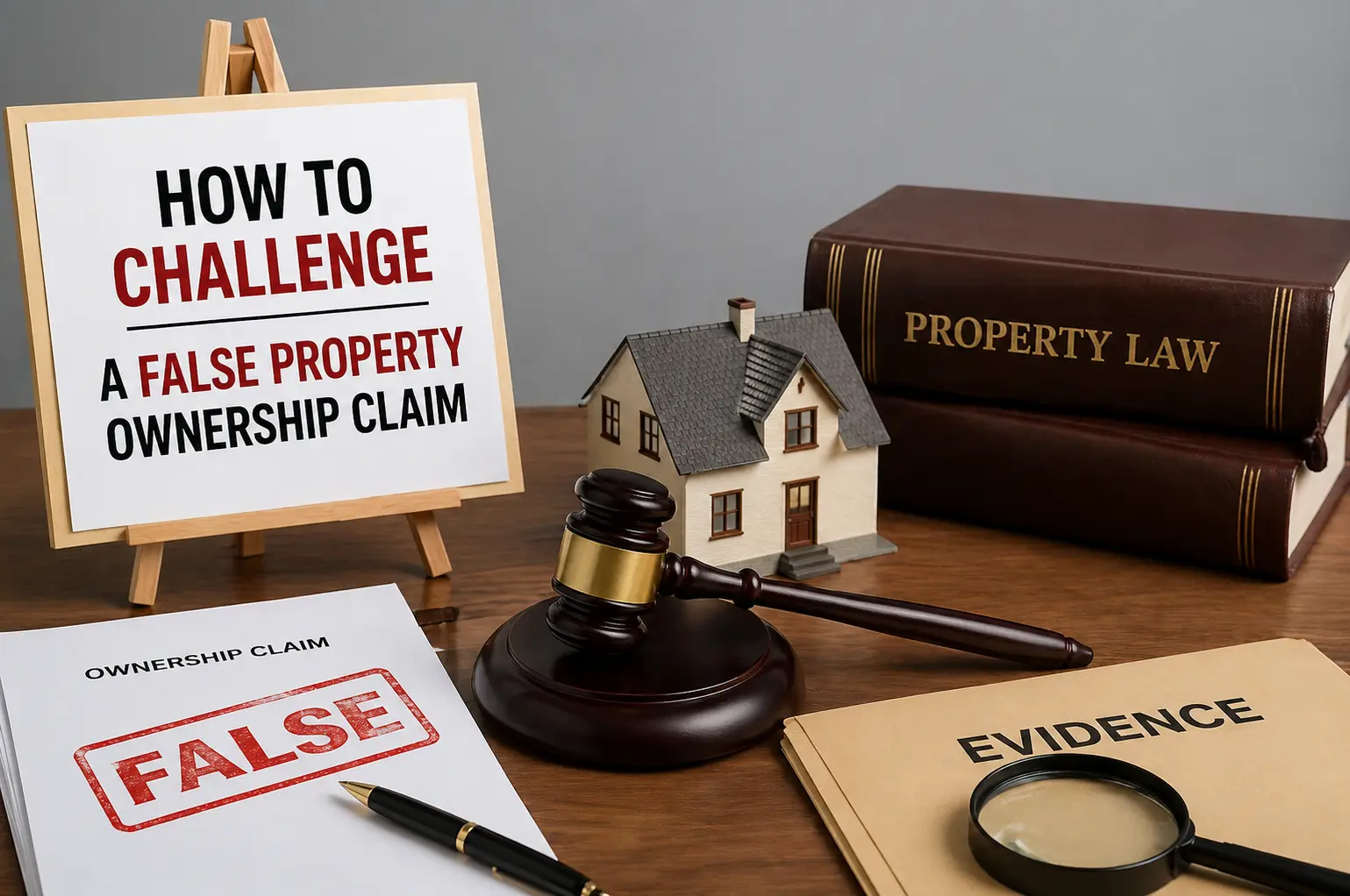
A false property ownership claim can shake a family, block a sale, disturb possession, damage title value, and create fear that years of savings may get trapped in litigation. Many clients first discover the problem casually: a neighbour says someone else is calling himself owner, a relative starts showing an old paper, a buyer finds a mismatch during due diligence, or a mutation record suddenly reflects a wrong name. That is the point where panic usually begins. A false property ownership claim is not just a paperwork issue. It may involve forged documents, wrong mutation entries, fake sale deeds, fraudulent GPA or SPA papers, false ancestral property claims, possession interference, or an attempt to create pressure before sale, partition, redevelopment or family settlement. In Delhi NCR, these disputes often become urgent because property values are high, transfers move quickly, and one wrong record can affect banks, buyers, builders, tenants and legal heirs. A person may have possession, registered documents and payment proof, yet still face a claim from someone who relies on an old agreement, unregistered document, forged deed, alleged family arrangement, false will or manipulated land record. The right legal response depends on facts. Sometimes a strong legal notice and title verification can stop the pressure. In more serious cases, the owner may need a declaration suit, injunction, cancellation of forged documents, mutation correction, police complaint for forgery or a combination of civil and criminal remedies. A false property ownership claim means a person asserts ownership, title, share or legal right over property without a valid legal basis, or by relying on forged, defective, misleading or disputed documents. The real owner must challenge it with evidence, timely legal action and court protection where required. If you are facing this situation, don’t treat it casually. Title disputes get worse with delay. Delhi NCR has a unique property dispute pattern. A flat in Rohini, ancestral house in Ghaziabad, builder floor in New Delhi, commercial unit in Noida, farmhouse land near Gurugram, or family property near Faridabad may carry different records, authorities and risks. Registry, possession, mutation, revenue entry, municipal record, builder allotment and family documents may not always tell the same story. A false claim can affect sale negotiations immediately. Buyers may withdraw. Banks may refuse loans. Tenants may stop paying rent. Family members may start taking sides. In commercial properties, even a rumour of title dispute can disturb business continuity. Delhi, New Delhi, Saket, Tis Hazari, Karkardooma, Dwarka, Rohini, Patiala House and Rouse Avenue also see many disputes where civil proceedings overlap with criminal allegations of forgery, cheating or document manipulation. Nearby NCR courts and authorities in Noida, Greater Noida, Ghaziabad, Faridabad and Gurugram add another layer because land records, mutation processes and local practices differ. A person dealing with a fake title dispute should first identify the nature of the claim. Is the opposite side claiming ownership, co-ownership, inheritance, possession, transfer rights, mutation rights, development rights or only a share? Each one needs a different legal response. Property owners often approach a lawyer late because they assume possession alone is enough. It may not be. If someone has started using false documents, filed objections before a revenue authority, issued a legal notice, entered wrong mutation, threatened sale or disturbed possession, the matter needs structured legal handling. For wider background on remedies, owners can also read about legal remedies for fake property ownership claims in India, especially where the dispute involves forged papers or false title assertions. A false property ownership claim is not always the same as a normal property disagreement. In an ordinary dispute, two sides may have arguable documents and the court decides whose title is stronger. In a false claim, one side may be relying on fake, manipulated, legally defective or misleading material. That distinction matters. A person may falsely claim ownership through a forged sale deed, unregistered agreement, fabricated gift deed, old GPA, false will, wrong mutation entry, fabricated family settlement, incorrect revenue record, or alleged oral understanding. In family property cases, people may also confuse possession, contribution, residence and emotional attachment with ownership. Courts usually look at title documents, chain of ownership, possession, revenue and municipal records, payment trail, conduct of parties and authenticity of documents. A property ownership dispute lawyer studies these layers together. One document alone rarely tells the full story. For example, if a person has a registered sale deed and actual possession, but the opposite side relies on a disputed GPA or false mutation entry, the response may include declaration, injunction, cancellation and correction of records. If forged signatures or fabricated stamps appear, criminal complaint may also become relevant. Delhi NCR matters often involve layered documents. Builder allotment letter, possession letter, sale deed, electricity bill, society record, property tax receipt, mutation order, family settlement and bank loan papers may all need comparison. A careful title review can separate a weak claim from a dangerous one. If your dispute is between two private parties both claiming title, this detailed guide on property ownership dispute between two parties may also help you understand the broader civil dispute angle. A false property claim can involve civil law, property law, evidence law, registration law, limitation law, revenue law and, in some cases, criminal law. The remedy should match the wrong. Filing the wrong case, or filing only one case where multiple remedies are required, can create long-term damage. The Specific Relief Act plays a central role in property title disputes. Section 34 allows a person entitled to a legal character or right to property to seek a declaration where another person denies or is interested in denying that right. The law also cautions that a plaintiff who can seek further relief should not omit it while seeking only declaration. This becomes important in a declaration suit for ownership of property. If someone falsely claims your property, you may not always ask only for a declaration. You may also need injunction, possession, cancellation, correction or other relief depending on the facts. Section 31 of the Specific Relief Act deals with cancellation of written instruments where the instrument is void or voidable and may cause serious injury if left outstanding. This is relevant in disputes involving forged sale deeds, fraudulent gift deeds, fake documents or instruments that cloud title. Sections 38 and 39 deal with perpetual and mandatory injunctions. These become relevant where the owner seeks to restrain interference or compel correction of a legal wrong in suitable circumstances. The Code of Civil Procedure governs how civil suits move before courts. Property owners may need to file a properly drafted plaint, interim application, documents, affidavit and supporting material. Temporary injunctions under Order 39 Rules 1 and 2 CPC may help protect property where there is danger of alienation, damage, dispossession or other interference during the suit. A stay order against false property claim is not automatic. Courts examine urgency, documents, possession, balance of convenience and risk of irreparable injury. A weak, vague or document-light injunction application can fail even where the underlying grievance is genuine. For readers dealing with immediate protection, the website has a dedicated discussion on an injunction suit for property possession and protection. Limitation decides whether the court can entertain a claim filed after the legally permitted period. The Limitation Act, 1963 consolidates and amends limitation law for suits and other proceedings. In property disputes, limitation varies by remedy. A suit for declaration, cancellation, possession, partition, injunction or recovery may have different limitation consequences. A person should not assume that “property matter has no limitation.” That mistake is common, and costly. Article 58 and Article 59 of the Limitation Act often become relevant in declaration and cancellation disputes. The exact starting point depends on when the right to sue first accrued or when the relevant facts became known. Timelines need legal examination before filing. Ownership of immovable property often depends on legally valid transfer documents. Registered sale deeds, gift deeds, relinquishment deeds, partition deeds, lease deeds, conveyance deeds and release deeds may have different legal consequences. A fake registry property dispute may involve the Registration Act, stamp requirements, impersonation, false witnesses, forged signatures or fabricated authority. Registry alone is not magic. If a document is forged, void, executed by a person without title, or obtained by fraud, it can still be challenged through proper legal proceedings. Registry and stamp problems need careful review. Property owners can study related issues through the site’s page on registry and stamp issues. Mutation entries, municipal records, khasra, khatauni, jamabandi, property tax records and online land records help prove possession, assessment or revenue recognition. They do not always prove ownership by themselves. A wrong mutation entry can still create serious practical harm. It can block sale, affect inheritance, create pressure during partition, or help a false claimant mislead buyers. That is why mutation correction and record challenge should not be ignored. Where online land records show an incorrect owner, this guide on incorrect land records and legal support may be useful. If the false claim involves forged property papers, cheating, impersonation, fabricated signatures or use of forged documents, criminal law may also arise. BNS provisions on cheating, forgery and using forged documents as genuine can become relevant depending on evidence. Section 318 defines cheating in broad terms involving deception and dishonest or fraudulent inducement. BNS also covers forgery and forged documents. Official BNS material includes sections relating to cheating, fraudulent deeds and dispositions of property, forgery and forged documents or electronic records. Criminal action should not be used casually as pressure in every civil dispute. But where forged documents, fake signatures, impersonation or fraudulent transfer appear, a legal complaint may become necessary. This guidance is for anyone facing a direct or indirect challenge to property ownership. That includes residential owners, commercial property owners, landowners, homebuyers, landlords, legal heirs, co-owners, family property holders, builders, real estate investors, senior citizens and NRIs. A senior citizen may discover that a relative has entered his name in local records. An NRI may learn that a caretaker or distant family member is claiming possession. A homebuyer may find that the seller’s title is under dispute. A landlord may face a tenant who starts denying the landlord’s ownership after years of tenancy. Family disputes need special care. False claim over ancestral property, false claim over family property and co-owner property disputes often carry emotion, old documents and informal arrangements. One brother may say the property was verbally divided. A sister may say her share was ignored. A cousin may produce an alleged will. In such matters, the lawyer must separate legal title from family pressure. Commercial disputes are different. A false claim over a shop, warehouse, office floor or industrial plot can affect rent, bank funding, licensing and business reputation. Even a pending title dispute can reduce buyer confidence. If the matter involves family ownership, ancestral property or inherited assets, owners may also review the service page on family property disputes. You challenge a false property ownership claim by verifying title, identifying the false basis, preserving possession and records, issuing a legal response, and filing appropriate civil or criminal proceedings where needed. A rushed reply without document review can harm the case. Start with the chain of ownership. In Delhi NCR, this may include sale deed, gift deed, conveyance deed, allotment letter, builder-buyer agreement, possession letter, completion certificate, mutation record, property tax record, electricity and water bills, family settlement, will, probate papers or court orders. The goal is simple: show how ownership moved legally from one person to another. Many clients bring only the latest document. That is not enough. A property title verification lawyer will usually trace the chain backward, check executants, dates, registration particulars, consideration, possession, stamp duty, witnesses and authority of the person who executed the document. For title-related reading, this guide on how to resolve a property title dispute legally in India gives a broader overview. A false claim may sound broad, but it usually rests on one specific ground. The person may say he bought the property, inherited it, received it by gift, holds GPA rights, has possession, paid consideration, has mutation, or owns a share. Each claim needs a different answer. A forged sale deed needs forensic and cancellation strategy. A false mutation entry needs record correction and objection. A fake will may need probate or succession challenge. A false possession claim needs evidence of actual possession and injunction. A fake GPA or SPA deal needs close review of authority, execution and registration history. Delhi NCR has seen many disputes around GPA and SPA property dealings. The website’s article on fake GPA and SPA property deals is directly relevant where the opposite side relies on power of attorney papers. A legal notice for false property claim can serve several purposes. It can deny the false claim, call for documents, demand withdrawal of illegal assertions, warn against third-party transfer, record your ownership position, and prepare the foundation for litigation. A notice should not be emotional or abusive. It should be precise. Mention property description, title basis, possession status, false claim details, demanded action and legal consequences. Many people make the mistake of sending WhatsApp threats or informal messages. Badly drafted communication may later be used against them. A property dispute legal notice lawyer can help frame the notice without weakening future court pleadings. If the false claimant threatens sale, dispossession, construction, transfer, entry, interference or document creation, injunction may become urgent. Temporary injunction against property interference can help maintain status quo while the court examines the dispute. Permanent injunction may be considered after trial where facts support it. Mandatory injunction may be relevant in limited cases where a party must undo a wrongful act. The relief depends on pleadings and proof. Courts usually do not grant protection only because a person is worried. They need documents, urgency and a legally recognised right. For urgent protection, owners can review the page on appeals for property and temporary protection, especially if an interim order has already gone against them. A declaration suit for property ownership is useful where the claimant denies your title or creates a legal cloud over it. The court may declare that you are the owner, co-owner, legal heir or holder of a specific right. A suit for declaration and injunction property is common where the person wants both title recognition and protection against interference. If a forged document exists, cancellation may also need to be added. One practical point matters: reliefs must be complete. If you need possession, cancellation or injunction but ask only for declaration, the suit may face objections. Section 34 itself recognises that a person who can seek further relief should not omit it. If the false claim rests on forged property papers, the owner may need a civil suit for cancellation of property documents. This may apply to forged sale deed, fake gift deed, fraudulent relinquishment deed, fabricated will, false GPA, fake agreement to sell or manipulated settlement deed. Court cancellation is important because a forged or disputed document may continue to cloud title until formally challenged. Buyers, banks and authorities may hesitate until the cloud is removed. Where deed cancellation is central, see the service page for deed cancellation. If the false claimant has obtained a wrong mutation entry, the property owner should challenge it before the appropriate authority or court depending on the record type and dispute nature. Mutation correction alone may not settle title where ownership is disputed. Revenue authorities generally do not decide complex civil title questions with the same finality as a civil court. A civil suit may still be needed. For record-related legal help, the page on mutation and land records is relevant. If the matter involves forged signatures, fake stamps, false identity, impersonation, fabricated registry, cheating or use of forged documents, criminal complaint may be considered. Still, not every title dispute is a criminal case. Courts and police often distinguish between civil ownership disputes and genuine document fraud. A complaint should show clear facts, documents, deception and wrongful gain or loss. Where the dispute has a property crime angle, the page on cases of property crime may help explain the service route. Good property litigation starts with documents. A lawyer can only challenge a false claim properly when the documentary story is clear. Keep registered sale deed, gift deed, conveyance deed, allotment letter, builder-buyer agreement, possession letter, completion certificate, lease deed, partition deed, relinquishment deed, family settlement, will, probate order or succession papers, as applicable. Also collect the full previous chain. If you bought from a seller, keep the seller’s title documents too. Possession evidence may include electricity bills, water bills, property tax receipts, society maintenance receipts, photographs, rent agreements, tenant records, police verification, keys, entry records, repair bills and neighbour statements where relevant. Possession does not always equal ownership, but it can strongly support injunction and protection. Collect mutation records, MCD or municipal records, house tax receipts, khasra, khatauni, jamabandi, revenue extracts, DDA or authority records, Noida or Greater Noida Authority records, HUDA or Haryana records where relevant. If the wrong name appears, get certified copies. Screenshots alone may not be enough. Ask for copies of the documents relied on by the false claimant. Do not rely only on oral information. If the person claims ownership through a document, the document must be examined. This may include fake sale deed, alleged agreement, will, GPA, SPA, gift deed, relinquishment deed, possession letter, mutation order or court paper. Preserve legal notices, WhatsApp messages, emails, letters, police complaints, property dealer messages, buyer communications, public notices, newspaper notices and call records where legally usable. Don’t edit screenshots. Keep original devices and backup copies. A false property claim should be examined quickly because delay can affect both legal remedies and practical control. Once the claimant starts approaching buyers, authorities or tenants, the matter becomes harder to contain. Limitation varies by remedy. Declaration, cancellation, possession, injunction, appeal, revision, revenue challenge and criminal complaint do not follow one single timeline. A lawyer must check the date when the right to sue arose, the date of knowledge, the date of interference, the date of document execution and the date of mutation or transfer. Urgent protection works on a different rhythm. If someone threatens transfer, construction, encroachment or dispossession, delay may weaken the urgency needed for interim injunction. Courts often ask why the person waited. Property owners should also act fast where third-party rights may be created. If the false claimant sells the property to another person, the dispute becomes more layered. A buyer may claim bona fide purchase, banks may enter the picture, and records may change. In Delhi NCR, practical delay also comes from certified copies, revenue records, registry searches, authority records, old chain documents, family records and police complaint movement. Prepare early. Where possession and forced sale risk exist together, this article on property possession, ownership and forced sales may help you understand why immediate legal assessment matters. Most property owners lose time in the first few weeks. Those weeks often decide whether the dispute remains manageable or becomes full litigation. Many people dismiss the first false claim as family drama or local pressure. Later, they discover a legal notice, mutation objection, buyer meeting or forged document. Possession helps, but title must still be shown through documents and law. A person in possession can face ownership challenge if records are weak. Photocopies, WhatsApp PDFs and verbal statements can mislead. Certified copies from the sub-registrar, court, authority or revenue office often reveal the real position. Angry replies, threats and informal admissions can damage a case. Every written response should be drafted with future litigation in mind. Forgery may need criminal action, but ownership usually needs civil relief. Police cannot grant declaration of title or cancel a sale deed. A person may file declaration but forget cancellation, injunction or possession. Incomplete relief can create procedural objections and delay. If the false claimant is approaching buyers, an injunction may be urgent. Waiting until the sale happens can complicate the dispute. Mutation is important, but it does not replace valid title. A wrong mutation entry must be challenged, yet title may still require civil court determination. In ancestral and family property disputes, old wills, relinquishment deeds, partitions, probate papers and settlement documents matter deeply. A forged sale deed case, wrong mutation case, possession dispute and family inheritance claim need different drafting. Generic notices rarely solve serious title disputes. Ignoring a false ownership claim can create legal, financial and practical damage. The false claimant may create third-party rights, disturb possession, mislead authorities, block sale, influence tenants, start construction or file a suit first. Delay can also weaken interim relief. If you approach court after months of silence, the other side may argue that there was no urgency. That does not end your rights automatically, but it can affect temporary protection. Financial risk is serious. Property value may fall during title dispute. Buyers may demand discount. Banks may reject loans. Builders may pause redevelopment. Tenants may hold rent. Business owners may face loss of confidence if the disputed property is commercial. Family risk is different. False ancestral property claims often divide families. People start preserving papers secretly, recording conversations, blocking access or pressuring senior citizens. A calm legal route protects both the property and the record. Legal risk also includes adverse pleadings. If the false claimant files first, you may become defendant and react under pressure. Sometimes it is better to take controlled legal action before the other side frames the dispute. If the matter involves boundary, encroachment or possession interference along with false ownership, the page on boundary and encroachment disputes may be relevant. Consult a lawyer as soon as someone denies your ownership, shows a suspicious document, threatens sale, changes mutation, interferes with possession or sends a legal notice. Early advice is cheaper than late litigation in most property matters. You should seek legal help immediately if: A property ownership claim lawyer can assess whether the first step should be legal notice, title search, injunction, declaration suit, cancellation suit, mutation challenge, police complaint or a combined route. If you need location-specific assistance, you may explore the dedicated page for a property lawyer in Delhi or related city pages depending on where the property and forum are situated. Property Lawyer Delhi assists clients facing false property ownership claims, title disputes, forged documents, mutation errors, possession interference, family property disputes and civil litigation across Delhi NCR. The service is practical, document-led and court-focused. Advocate BK Singh helps clients understand whether their matter needs legal notice, title verification, declaration suit, injunction, cancellation of forged property documents, mutation correction or criminal complaint for forgery and fraud. The objective is not to create unnecessary litigation. The objective is to protect title, possession and legal position through the correct route. A property dispute lawyer in India must read the documents before advising the remedy. One missing sale deed, one old family settlement, one wrong mutation order or one forged witness signature can change the entire strategy. For service options, you can visit the firm’s legal services page. If you need direct consultation for a false ownership claim, title dispute or forged property paper issue, use the contact page and share the basic property details, location and available documents. Advocate BK Singh and the team also assist clients in Noida, Ghaziabad, Faridabad, Gurugram and other NCR locations depending on the forum, property location and urgency. You can check the pages for a property lawyer in Noida, property lawyer in Ghaziabad, property lawyer for Faridabad Court, and property lawyer for Surajpur Court. First, collect your title documents, possession proof, mutation records and any communication from the false claimant. Do not give emotional replies. Get the claim legally reviewed, then consider legal notice, injunction, declaration suit, cancellation or criminal complaint depending on the facts. Yes, if someone denies your ownership or creates a cloud over your title, you may file suitable civil proceedings such as declaration, injunction, cancellation or possession-related relief. The exact case depends on documents, possession and the nature of the false claim. You prove property ownership through title chain, registered documents, payment proof, possession evidence, mutation or municipal records, tax receipts, authority records, witness evidence and other supporting documents. Courts examine the full chain, not just one document. Mutation supports revenue or municipal records, but it does not by itself create ownership. A person with wrong mutation can still lose if title documents are defective. A wrong mutation entry should be challenged early. You may seek temporary injunction if there is a real threat of sale, transfer or third-party rights. The court will examine your title, possession, urgency, balance of convenience and risk of irreparable injury. A forged sale deed may require a civil suit for cancellation, declaration and injunction. If forgery, cheating or impersonation is supported by evidence, criminal complaint may also be considered. Yes. Ancestral and family property disputes often involve inheritance rights, succession, partition, family settlements, wills, relinquishment deeds and possession history. The lawyer must examine both title and family relationship. Yes, where there is evidence of forged signatures, fake stamps, impersonation, cheating or use of forged documents. But civil remedies may still be needed because police cannot declare title or cancel registered documents. Timelines vary by court, relief, evidence, interim applications and conduct of parties. Urgent injunction applications may be heard earlier, but final decision in a civil suit can take longer. Delay also depends on documents, witnesses and court workload. Contact a lawyer when someone denies your title, shows fake papers, changes mutation, threatens possession, issues legal notice, approaches buyers or interferes with property use. Early document review can prevent bigger litigation. A false property ownership claim should never be handled casually. It can start as a verbal assertion and later become a forged document, wrong mutation, sale obstruction, possession threat or full civil case. The safest response is document-led. Verify title, preserve evidence, identify the false basis, respond in writing where needed and seek court protection if the property is at risk. Delhi NCR property disputes move fast because buyers, banks, authorities and families react quickly to title concerns. If your property is being falsely claimed, take proper advice before replying, negotiating or filing any case. A careful first step often saves years of avoidable litigation. For title dispute, forged document, declaration suit, injunction, mutation correction or ownership dispute legal help, consult a qualified property dispute lawyer and keep your documents ready. This article provides general legal information only and should not be treated as legal advice for any specific case.How to Challenge a False Property Ownership Claim in India
Why This Issue Matters in Delhi NCR in 2026
Quick Facts Box
Point Practical Meaning A false ownership claim can be challenged through civil proceedings, legal notice, title verification, injunction and document cancellation. The correct route depends on facts and documents. A declaration suit may be filed when a person’s title or legal character is denied. Section 34 of the Specific Relief Act deals with declaratory relief. A forged or voidable property document may require cancellation through court. Section 31 of the Specific Relief Act is commonly relevant for cancellation of instruments. Temporary injunction may protect property during litigation. Order 39 Rules 1 and 2 CPC deal with temporary injunctions in suitable cases. Mutation does not itself create ownership. It is an important revenue or municipal record, but title usually flows from valid legal documents and law. Forged documents may also invite criminal action. BNS provisions on cheating, forgery and use of forged documents may become relevant. Delay can weaken urgency. Limitation, possession risk and third-party transfer risk must be checked early. Understanding the Core Legal Issue
What Legal Framework Applies to a False Property Ownership Claim?
Specific Relief Act, 1963
Code of Civil Procedure, 1908
Limitation Act, 1963
Registration Act, Transfer of Property Act and Stamp Law
Revenue, Mutation and Land Records
Bharatiya Nyaya Sanhita, 2023
Who Needs This Guidance?
How Do You Challenge a False Property Ownership Claim?
First, collect the full title chain
Second, identify the exact false claim
Third, send a strong legal notice where suitable
Fourth, seek injunction if there is threat
Fifth, file a declaration suit where title needs court recognition
Sixth, challenge forged or fraudulent documents
Seventh, correct mutation and revenue records
Eighth, consider criminal complaint only where evidence supports it
Documents and Evidence Checklist
Ownership and title documents
Possession and use evidence
Revenue and municipal records
Disputed documents from the opposite side
Communication and threat evidence
Timelines, Practical Delays and Decision Windows
What Mistakes Do People Make While Fighting a False Property Claim?
What Are the Risks of Ignoring a False Property Ownership Claim?
When Should You Consult a Property Ownership Dispute Lawyer?
How Property Lawyer Delhi Can Help
Frequently Asked Questions
1. What should I do if someone falsely claims my property?
2. Can I file a case against a false property ownership claim?
3. How do I prove property ownership in court?
4. Can mutation prove ownership?
5. Can I stop someone from selling property based on a fake claim?
6. What if the opposite side has a forged sale deed?
7. Is a false ancestral property claim different from a normal title dispute?
8. Can I file a police complaint for fake property documents?
9. How long does a property ownership dispute case take?
10. When should I contact a property dispute lawyer?
Final Thoughts
Disclaimer
There's no reason for concern. There is no difficult-to-understand legalese.
Someone who has helped many people with the same problems gives you clear, honest advice. We want to make the legal process easy to understand and use for everyone.
Schedule Your Consultation