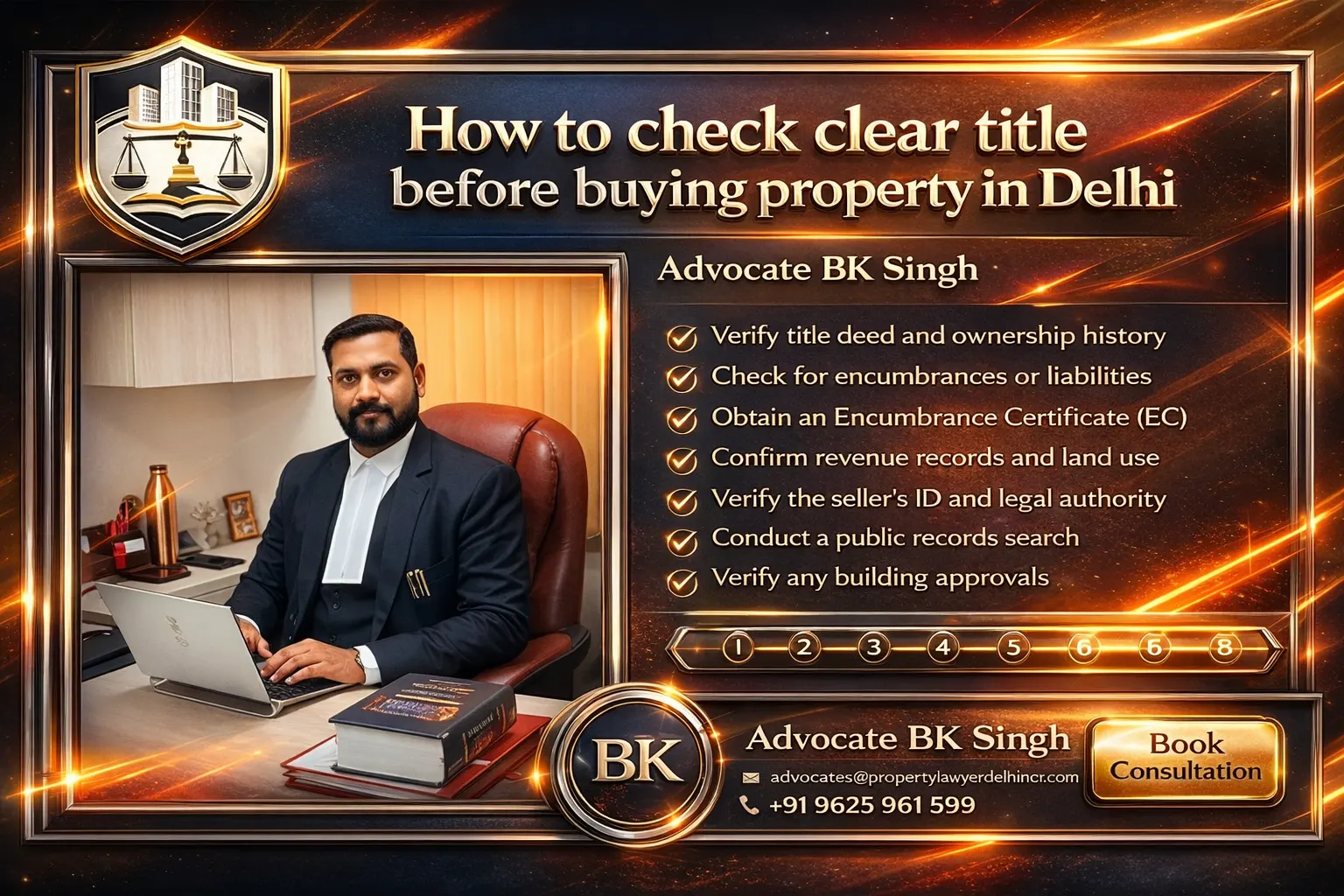
How to check clear title before buying property in Delhi
For a family or a growing business, buying a home or a small commercial unit in Delhi is often the biggest financial step they will ever take. The real risk is usually in the paperwork, not in the paint or the interiors. A clear title means that the seller is the legal owner, there are no hidden claims on the property, and the chain of documents supports the sale without any gaps, disputes, or unpaid debts that could come back to haunt the buyer later.
Property Lawyer Delhi often sees buyers who paid a small amount in good faith but later found an old loan, a family claim, a builder dispute, or a record mismatch that stopped them from registering or selling the property. Advocate BK Singh says that you should treat title verification like a safety check, where you check every document against what is really happening and government records. This way, your purchase will be safe and stress-free from the start.
1. What "clear title" really means in property deals in Delhi
In Delhi, a clear title means that the seller has the legal right to sell the property, it is not in a lawsuit, attachment, mortgage, or unresolved family claim, and the buyer has the right to own it. It also means that the papers match the property on the ground, including its size, boundaries, floor, and rights, such as freehold, leasehold, or development rights.
Property Lawyer Delhi says that a clear title is not just one piece of paper; it is a whole story made up of allotment, conveyance, sale deeds, and any inheritance records. Advocate BK Singh says that you should check both the ownership trail and the risk trail to make sure you don't buy a property that looks clean but has a hidden problem.
2. Begin with the documents that show who owns what
Start by getting all of the chain of title documents for the last thirty years or since the first allotment, whichever is later. This includes the allotment letter, the conveyance deed, the lease deed (if there is one), any previous sale deeds, gift deeds, probate or succession documents, and any builder-buyer agreement if the flat is being sold.
Property Lawyer Delhi sees missing links as a warning sign, especially when a seller only shows the most recent papers and doesn't show older transfers. Advocate BK Singh says that every transfer must be checked to make sure it was legal, properly stamped, and in line with the next one. This is because one weak link can affect your ownership and ability to get a loan.
3. Check to see if the property is freehold, leasehold, or on a power of attorney (POA) document.
There are many types of properties in Delhi, such as freehold DDA converted properties, leasehold plots, cooperative group housing flats, and properties sold through older GPA sale patterns in some areas. Lenders and sub-registrars may not accept the same set of documents for all categories because each one has its own set of risks.
Before negotiating a price, Property Lawyer Delhi tells buyers to make sure they know what their rights are, because conversion fees, lease restrictions, or transfer permissions can all affect the real cost. Advocate BK Singh looks into whether the seller has the right to transfer, whether the previous conversion was valid, and whether any authority permission is needed to avoid failing to register at the last minute.
4. Check for risks related to loans and encumbrances
Encumbrance checks look for things like bank loans, mortgages, charges, or attachments on the property. These things can stop registration and also start recovery action. Buyers should ask for proof of loan closure, the release of the original title documents, and a clear confirmation that no one else has a claim on the property.
Property Lawyer Delhi often sees cases where the seller says the loan is closed verbally, but the release paperwork is missing or not recorded correctly. Advocate BK Singh says to check the loan closure with documents and independent checks, because a property with a hidden charge can become a legal burden even if you bought it honestly.
5. Before you pay the token money, check the history of lawsuits and disputes.
Litigation checks are important because a property could be in a civil dispute, a partition suit, builder-buyer litigation, or even an injunction that stops the sale. Many disputes don't come up when you ask casually, so buyers should ask direct questions, read seller statements, and, if possible, check case history with a lawyer.
Property Lawyer Delhi deals with a lot of cases where buyers found out about a stay order after paying a lot of money and then spent months trying to get their money back. Advocate BK Singh suggests doing a focused legal search based on the seller's name, property details, and the area where the property is located. This way, you won't walk into a dispute that was already building quietly.
6. Look at the records of municipal dues, society dues, and utilities.
A clean title is stronger when dues are clear. This is because unpaid property taxes, water bills, electricity bills, or society maintenance can cause problems with the law and in real life after the sale. In many Delhi colonies, mutation and tax records also help civic systems figure out who is the owner.
Property Lawyer Delhi says you should get the most recent paid receipts and make sure that the name and property details match the seller and the unit you are buying. Advocate BK Singh looks over these records as supporting evidence because when bills and documents don't match up, it usually means that there is a gap in ownership or a transfer that hasn't been recorded.
7. Check that the property on the ground matches the approved plans and occupancy status.
Buyers of flats and floors must check that the building is being built according to the approved plan and that the completion or occupancy status matches what the seller says it is. Adding things without permission, giving the wrong floor descriptions, or giving the wrong area can all lead to fines, sealing risk, and problems with selling the property in the future.
Property Lawyer Delhi says that buyers should think of site inspection and document inspection as one activity instead of two separate ones. Advocate BK Singh carefully checks the boundaries, access, common areas, and floor identity. Even a small mistake can cause big problems when registering and getting a bank valuation.
8. Real-life situations in Delhi and the safest way to buy things
One common situation in Delhi is when a family member is living abroad or is separated from the rest of the family. The seller thinks that consent will be arranged later, but this can lead to a big fight after the sale. Another common situation is a builder floor where the paperwork looks complete but the land ownership trail is weak. Buyers only find out about this when they try to get a home loan or sell the property.
Property Lawyer Delhi suggests a simple and safe way to do things: first, check the documents, then get a legal opinion on the title, and only then sign and pay in stages with proper receipts and protections. Advocate BK Singh also says that some online property portals only let you create an account after you've finished the process, so you don't have to delete it if you only looked at the process and didn't finish it.
Reviews from Clients
*****
Rohit Mehra
I was almost done with a deal in Delhi, but something didn't feel right because the seller kept asking for quick payment. Property Lawyer Delhi set up a proper title check, and Advocate BK Singh made the gaps in the ownership trail clear to me. That clarity kept my family from making a dangerous purchase and gave us the confidence we needed to switch to a safer option.
*****
Neha Kapoor
I needed to buy a small shop for my business, but I was worried about past loans and disputes because the area had a lot of different types of paperwork. The property lawyer in Delhi looked over the papers, and Advocate BK Singh told me what proof I should ask for before I paid anything. I felt safe at every step, and the registration went smoothly without any last-minute surprises.
*****
Imran Siddiqui
The broker said everything was clear, but the papers didn't match the measurements on the site, which made me confused. The checks were organized by Property Lawyer Delhi, and Advocate BK Singh explained in detail why the mismatch could cause problems in the future. With that advice, I was able to negotiate well and only bought when the papers matched what was really going on.
*****
Shalini Bansal
We were buying a flat for our family, and we wanted to be sure that everything would be fine because it was our life savings. The Property Lawyer Delhi was very careful when checking the information, and Advocate BK Singh gave useful advice without using scary language. We finally signed after everything was checked, and we really felt better.
*****
Karan Malhotra
I was about to pay a large amount of money, but I asked Property Lawyer Delhi for a quick legal opinion first. Advocate BK Singh found a risk of a dispute that could have kept my money locked up for months. The way the process was handled was calm and open, which made me trust the legal route more than quick decisions.
?FAQs
Q1. How do I look up property titles online in Delhi?
You can start by gathering the seller's papers and checking them against records that are already available. However, a full title check requires both document chain verification and risk checks. Property Lawyer Delhi and Advocate BK Singh usually do both document reviews and practical checks, so online information is not always considered final proof.
Q2. What papers show that you own a flat in Delhi?
Most of the time, you need the previous sale deed chain, allotment or conveyance documents, proof of the seller's identity, and records that support the seller, like tax and utility bills. Advocate BK Singh says that you should not only look for one sale deed but also check to see if the chain is complete and consistent.
Q3. How many years of title history should I check before I buy?
A lot of people check claims and transfers that are older than thirty years or from the first allotment if the property is newer. This is because it helps catch older claims and transfers. Advocate BK Singh and Property Lawyer Delhi both use this method to lower risk. Advocate BK Singh also looks at local factors like inheritance history and patterns of redevelopment.
Q4. What is the difference between a freehold and a leasehold property in Delhi?
Freehold usually gives you stronger ownership rights, but leasehold may come with conditions on authority and restrictions on transfer, depending on the terms. Advocate BK Singh looks over the exact category and paperwork because the right to sell and how easy it is to register can be very different.
Q5. Is it safe to buy a property in Delhi through GPA?
A lot of older transactions were done using GPA patterns, but it can be hard to get legal approval and bank funding because of the facts and paperwork. Property Lawyer Delhi says to be extra careful, and Advocate BK Singh usually checks to see if the buyer can get the property and if they will have problems selling it or getting a loan in the future.
Q6. How can I find out if a property has a mortgage or home loan?
Ask for proof of loan closure, the release of original documents, and written confirmation of no charge. Then, have a lawyer check the paperwork before you pay. Advocate BK Singh says not to trust what people say because incomplete release documents can still be risky.
Q7. What if the seller is one heir, but other family members might also have a claim?
When it comes to inheritance-based properties, you need to carefully check that all heirs are legal heirs and that they all agree to or legally transfer the property. Property Lawyer Delhi often deals with these kinds of cases, and Advocate BK Singh makes sure that buyers don't have to deal with a family dispute when they buy a property.
Q8. Should I look at the property tax and electricity bills to make sure the title is correct?
Yes, these records prove that you own the property and can help you find mistakes in the property details or unpaid bills that could become a problem for you later. Advocate BK Singh says that these are supporting evidence that makes the title more secure when they match the title documents.
Q9. Can I pay token money before the title check is done?
It's safer to pay only after you feel comfortable with the basic title, because token disputes happen a lot and getting your money back can be stressful. Property Lawyer Delhi tells buyers to take their time, and Advocate BK Singh sets up payments with smart safety measures.
Q10. When should I get a property lawyer to help me buy in Delhi?
Before you sign any contract or pay a lot of money, you should talk to a lawyer. It's best to do this right after you pick out the property. Property Lawyer Delhi and Advocate BK Singh help you avoid risks that you don't have to take, which is always cheaper than fixing problems after you've paid.
There's no reason for concern. There is no difficult-to-understand legalese.
Someone who has helped many people with the same problems gives you clear, honest advice. We want to make the legal process easy to understand and use for everyone.
Schedule Your Consultation